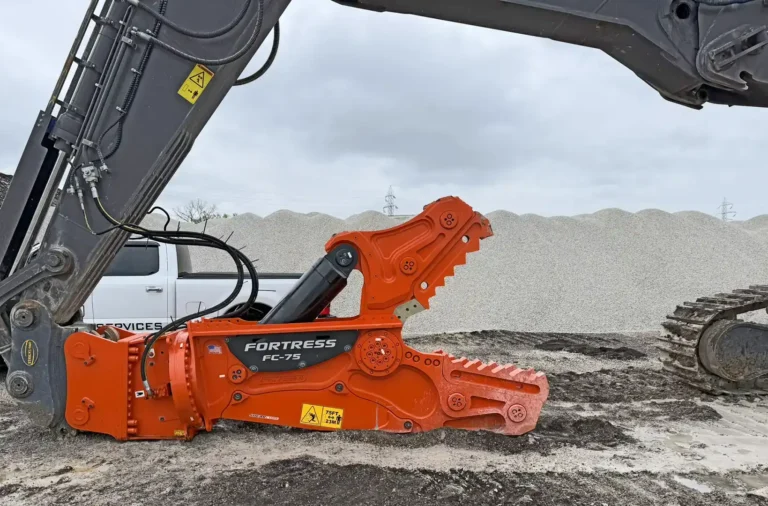
Walk onto almost any concrete demolition job and you’ll see the same pattern play out. The crew starts by breaking heavy material—walls, footings, slabs—then shifts into cleanup mode, sizing concrete for hauling or feeding a crusher. Traditionally, that transition means switching attachments or working around a tool that isn’t quite right for the phase of work at hand.
Over the years, many contractors tried to solve this by buying two‑jaw processors. On paper, it makes sense: one jaw for primary demolition, another for pulverizing. In reality, something else happens. The pulverizer jaw does most of the work, while the primary jaw sits on the ground—or in the yard—unused far more often than anyone expected.
That jobsite reality is exactly where the FC‑75 Fortress Cracker began.
Two‑jaw processors are often purchased with the best intentions. But after years of field experience, a clear pattern emerged: the primary jaw set doesn’t get used nearly as often as it’s bought for. Crews gravitate toward what’s efficient, familiar, and flexible. When time is money, swapping full jaw sets—or wrestling with a tool that isn’t optimized for the task—quickly loses its appeal.
The result? Contractors pay for capability they rarely use, carry extra attachment cost on the balance sheet, and still compromise productivity in the field.
The question became simple:
What if you didn’t need two jaws at all?
Instead of building another multi‑jaw system, the Fortress engineering team took a step back. What if the processor body stayed the same—but the teeth changed with the job?
That idea became the foundation of the FC‑75 Fortress Cracker.
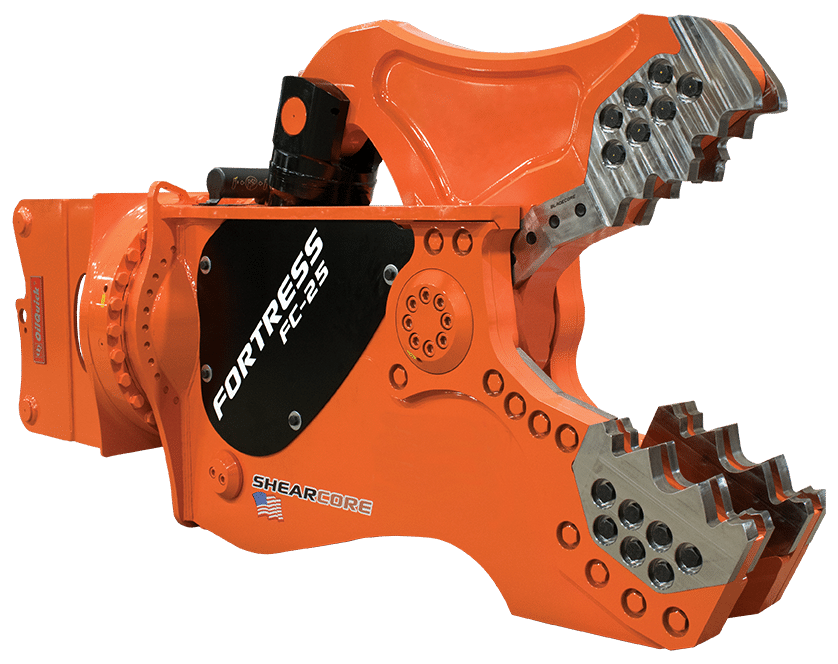
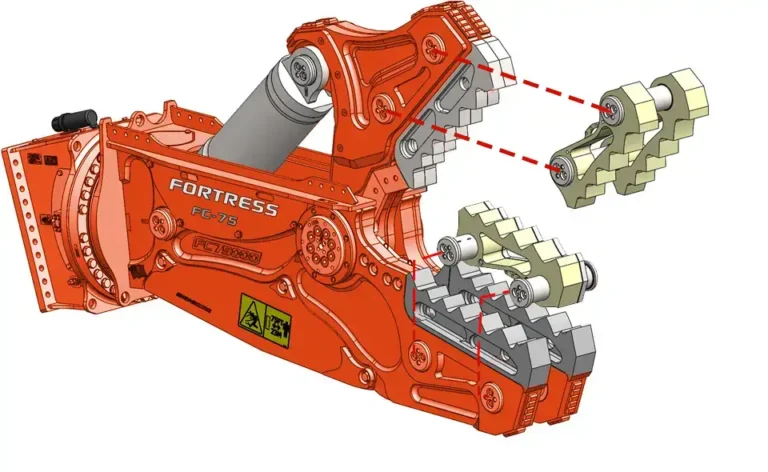
Rather than forcing contractors to commit to multiple jaw sets up front, the FC‑75 is built around a single, extremely powerful processor body paired with optional, application‑specific tooth arrays. The operator decides how the tool works—based on the material, the phase of demolition, and how the job is actually performed.
The FC‑75 is also a brand‑new size in the Fortress concrete processor lineup. It fills an important gap for contractors running mid‑to‑large carriers who need serious processing power without stepping into the largest class of attachments.
At roughly 7.5 metric tons depending on configuration, the FC‑75 delivers the mass, strength, and hydraulic authority expected from a Fortress attachment—while introducing a level of flexibility that hasn’t existed in the line before.
This isn’t a repackaged model. It’s a purpose‑built processor designed from the ground up around modular capability.
At its core, the FC‑75 is still unmistakably Fortress.
The processor is built on the same Fortress‑engineered platform known for:
This foundation matters. The modular tooth concept only works if the base processor is strong enough to handle every configuration without compromise. The FC‑75 is.
What makes the FC‑75 different is how it adapts.
In its base configuration, the FC‑75 functions as a serious primary demolition attachment—built to crack, break, and process reinforced concrete efficiently. When the job shifts from breaking to sizing, the processor doesn’t need to come off the machine.
Instead, pulverizer teeth can be quickly added to the main processing tooth structure, transforming the FC‑75 into a secondary concrete processor. The changeover is designed to be simple and fast, minimizing downtime and keeping the crew productive.
The result is one processor that can cover:
Rather than owning multiple jaws, contractors build the tool around how they actually work.
Power is only part of the equation. Control matters just as much.
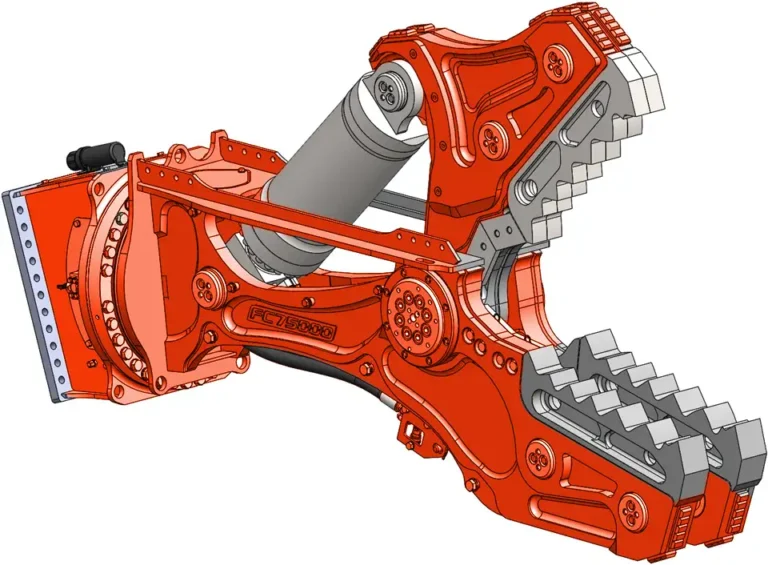
Like other Fortress FC processors, the FC‑75 is designed to cut rebar at the teeth, reducing the need to reposition material deeper into the jaw. In addition, apex cutting blades at the throat of the jaw help keep material captured during the cut. That means less slippage, fewer re‑grabs, and smoother processing—especially when working with irregular or reinforced concrete.
These details are easy to overlook, but they make a real difference over a long day of demolition.
The FC‑75 Fortress Cracker wasn’t designed to check a box—it was designed to solve a cost and efficiency problem contractors already understand.
By offering one processor body with optional tooth arrays, the FC‑75 helps:
Instead of buying capacity “just in case,” contractors invest in capability they’ll actually use.
The FC‑75 makes sense anywhere crews need flexibility without sacrificing power:
It’s a processor designed for the way demolition actually happens—not the way it looks in a catalog.
The FC‑75 Fortress Cracker represents a shift in thinking. It’s not about adding more jaws, more complexity, or more cost. It’s about building a Fortress‑engineered processor that adapts to the job—and to the operator.
One body. Multiple tooth configurations. Less waste. More work done.
That’s the story behind the FC‑75. And it’s just getting started.
About ShearCore
ShearCore, a division of Exodus Global, is a leading manufacturer of high-performance demolition and scrap recycling attachments, including the Fortress line of mobile shears and concrete processors. Proudly based in Superior, Wisconsin, ShearCore products are known for their innovation, strength, and unmatched support.
Exodus Global is an American Owned, family company that manufactures and distributes attachments for the scrap recycling, construction and demolition industries. Our distinguished brands include BladeCore, Connect Work Tools, OilQuick Americas, RockZone Americas, and ShearCore.